Where Culture Actually Comes From
Culture is one of the most discussed topics in leadership. It is also one of the most frequently misunderstood.
Most conversations about culture focus on values. What the organization believes. How people should behave. What kind of environment does the leadership want to create?
These conversations matter. But values do not create culture. Behavior does. And behavior is shaped by structure.
The Gap Between Stated Culture and Lived Culture
Every organization has two cultures.
The one described in the values documentation. And the one that actually governs how people operate day to day.
In the best organizations, these are closely aligned. In most organizations, there is a gap. Not because the values are wrong. But because the structures that would reinforce those values have not been built.
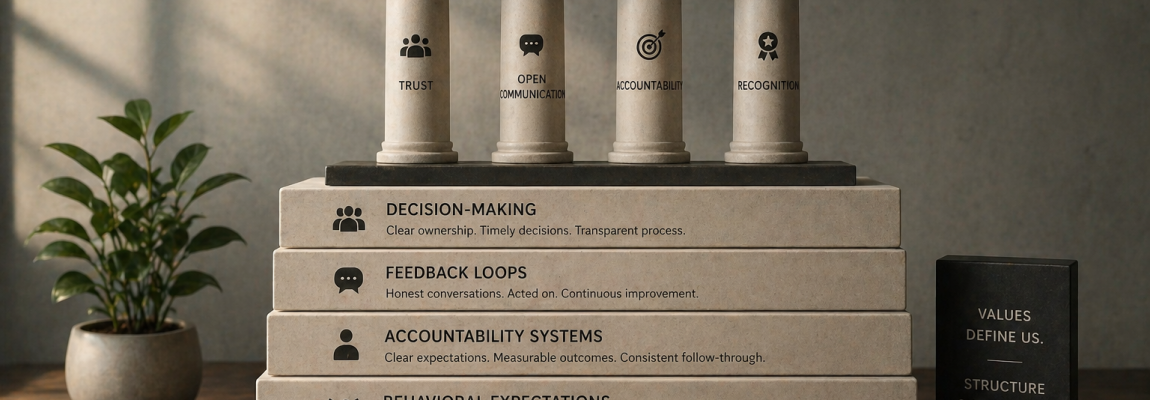
A team can believe in transparency without having the forums for honest conversation. A team can value accountability without having clear systems for ownership. Belief is the foundation. Structure is what makes it functional.
What Structure Actually Means
Structure is not bureaucracy.
It is the set of consistent practices that make a culture repeatable and resilient. How decisions are made. How feedback flows. How performance is recognized. How conflict is resolved.
When these things are clear and consistent, people know what to expect. They can operate with confidence. They can hold each other accountable without ambiguity.
When they are unclear or inconsistently applied, culture becomes dependent on individual personalities. It works in some teams and not others. It survives strong leadership and collapses when that leadership changes.
The Leader’s Role in Building Structure
Leaders shape structure through behavior more than through policy.
When a leader asks for honest input and responds to it without defensiveness, they build a structure of psychological safety. When a leader follows through consistently on what they commit to, they build a structure of trust. When a leader gives recognition that is specific and earned rather than generic and frequent, they build a structure of meaningful accountability.
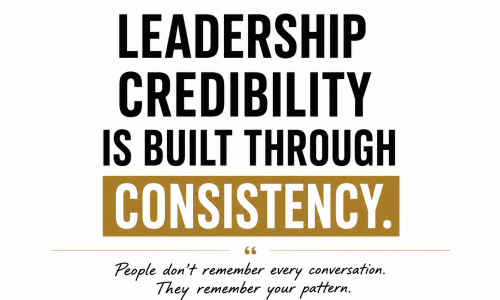
Each of these behaviors, repeated consistently over time, creates a pattern. That pattern becomes the culture.
Where Structure Breaks Down
Most structural failures in culture are not dramatic.
They are the meeting that consistently runs over their purpose. The feedback that never reaches the people who need to hear it. The high performer whose behavior is tolerated in ways that undermine the stated values.
These small inconsistencies accumulate. They send signals to the rest of the organization about what is actually acceptable. Over time, those signals override whatever is written on the values page.
Leaders who want to build a strong culture have to take these moments seriously. Not as problems to manage, but as opportunities to reinforce what the culture is actually built on.
Building Structure Intentionally
The strongest cultural structures are not built in a single initiative.
They are built through repeated, intentional decisions over time. Consistent hiring criteria. Regular and honest performance conversations. Clear decision-making authority. Visible recognition of the behaviors the organization wants to see more of.
None of this is dramatic. All of it is necessary.
A culture that lasts is not built on inspiration. It is built on repetition.
The Takeaway
Culture is the outcome of the structures leaders put in place, maintain, and model every day.
It is not enough to define the values. The work is in building the practices that make those values real.
When structure and values are aligned, culture becomes self-reinforcing. People know what is expected. They trust that it applies consistently. And they begin to hold it for each other, which is when culture becomes something the organization truly owns.