Why Failure Is Not the Real Problem
Failure is rarely neutral. It disrupts momentum. It affects confidence. It introduces doubt, even in experienced leaders. But over time, I have noticed that failure affects leaders less by the event itself and more by how they respond to it.
Two leaders can experience the same setback and walk away changed in completely different ways.
One may try to move past it quickly, hoping that speed will make it feel smaller. Another may become more cautious, second-guess decisions, or quietly lose confidence. In both cases, the failure is not what defines the outcome. The response is.
The Risk of Moving On Too Quickly
There is often pressure to recover fast.
Results still need to be delivered. Teams still need direction. Momentum feels important. But when leaders rush past a setback without reflection, they lose something valuable.
Unexamined failure tends to repeat itself.
Without pausing to understand what actually happened, assumptions remain unchallenged. Patterns remain intact. Systems that contributed to the issue are left untouched.
Moving on may feel productive. It is not always corrective.
When Failure Becomes Useful
The leaders who handle setbacks best tend to do something different. They pause.
Not to assign blame. Not to overanalyse. But to understand.
When approached this way, failure becomes information.
It reveals gaps in systems. It exposes assumptions that were never questioned. It highlights decision-making patterns that may need adjusting. The focus shifts from individual mistakes to collective learning.
Failure stops being personal and starts becoming practical.
The Questions That Create Growth
Constructive reflection is rarely dramatic. It is structured and deliberate.
It often begins with better questions:
What did this situation reveal that we had not seen before? What needs to change so we do not repeat the same pattern? How do we move forward with a clearer understanding of what did not work?
These questions redirect attention from fault to improvement.
They make it possible to move forward with clarity rather than lingering uncertainty.
How Leadership Shapes Team Culture
When leaders model this kind of reflection, teams pay attention.
People become more open about challenges instead of hiding them. Conversations become more honest. Setbacks are addressed earlier, before they grow into larger problems.
Over time, this changes how failure is experienced within the team.
It becomes part of learning. It becomes data. It becomes direction.
Instead of something to quietly avoid, it becomes something to examine and improve.
The Long-Term Impact
In my experience, failure itself rarely causes long-term damage. Avoiding reflection afterwards usually does.
Leadership does not eliminate setbacks. It determines whether those setbacks weaken confidence or strengthen judgment. It determines whether teams grow more cautious or more capable.
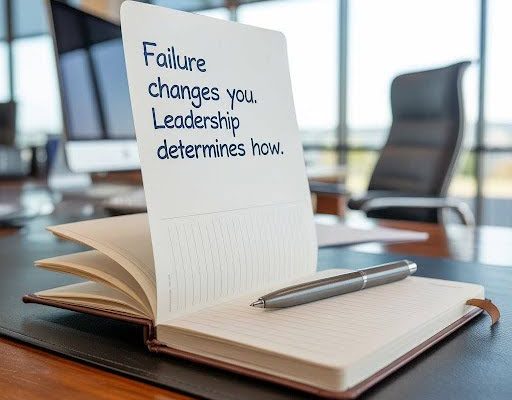
Failure changes you. Leadership determines how.