
The Difference Between Authority and Leadership
A title can make people listen to you. At least for a while. It can give you decision-making power, formal responsibility, and the ability to direct others. It can create compliance because people recognise the position you hold.
But leadership and authority are not the same thing. Authority comes from a role.
Leadership comes from influence. And while authority may open doors initially, influence determines whether people genuinely choose to follow.
This distinction becomes increasingly important as teams become more experienced, workplaces become more collaborative, and leadership expectations continue to evolve.
Because at some point, people stop responding to authority alone and start responding to leadership itself.
Why Positional Power Eventually Expires
Many leaders mistakenly assume that their title is the source of their influence. In reality, titles often create access before they create trust.
A manager may have the authority to assign work. A director may have the authority to make decisions. A business owner may have the authority to set direction. But authority alone cannot create engagement.
It cannot create loyalty. And it cannot create commitment.
I’ve seen leaders who could generate immediate compliance because of their position, yet struggled to create genuine buy-in from the people around them.
On the surface, everything appeared fine. Tasks were completed. Meetings were attended. Instructions were followed.
But beneath the surface, something important was missing. Trust. And eventually, the absence of trust becomes impossible to ignore.
The Hidden Cost of Leading Through Authority Alone
When leadership relies too heavily on positional power, teams often begin to change in subtle ways. People stop challenging ideas. Communication becomes guarded. Employees become less willing to raise concerns. Initiative begins to disappear.
Collaboration becomes transactional rather than genuine. People do what is required, but rarely more than that. The danger is that these signs often develop gradually. Leaders may not notice them immediately because work continues to get done.
But over time, innovation slows. Engagement declines. Relationships weaken. And the organisation loses many of the benefits that come from trust-based leadership.
Authority may influence behaviour. But it rarely inspires commitment.
Why Modern Leadership Requires More Than Control
The workplace has changed significantly. People have greater access to information than ever before. Teams are often more specialised, more knowledgeable, and more connected than previous generations.
This has changed what people expect from leaders. Most professionals are not looking for someone who simply tells them what to do. They want clarity. They want communication.
They want support. They want leaders who can help create environments where people can perform at their best.
Clients have similar expectations. They are rarely impressed by status alone. They are influenced by credibility, expertise, trust, and relationships. This is why intimidation is becoming less effective as a leadership strategy.
People increasingly respond to leaders who can communicate well, build trust, manage pressure effectively, and create psychological safety.
Influence has become far more valuable than authority.
What Creates Lasting Influence
The strongest leaders I’ve worked with shared a common characteristic. People trusted them. Not because of their title. Not because of their seniority. But because of how they consistently showed up.
They communicated clearly. They treated people with respect. They followed through on commitments. They remained calm under pressure.
They listened before making assumptions. And they made people feel valued rather than controlled.
These behaviours created influence that extended far beyond formal authority.
Even when those leaders moved teams, changed roles, or lost positional power, people continued to respect and follow them.
Because trust travels further than titles.
Leadership That Survives Beyond the Role
One of the most revealing leadership tests happens when someone’s position changes. Some leaders lose influence almost immediately. The moment the title disappears, so does much of the followership.
This often happens because authority was carrying the leadership. People were responding to the position rather than the person. Other leaders experience the opposite. People continue seeking their advice.
Former colleagues continue reaching out. Teams continue respecting their opinions. Their influence survives because it was built on relationships, credibility, and trust rather than hierarchy.
That is leadership in its strongest form. Influence that exists independently of authority.
How Leaders Earn Trust
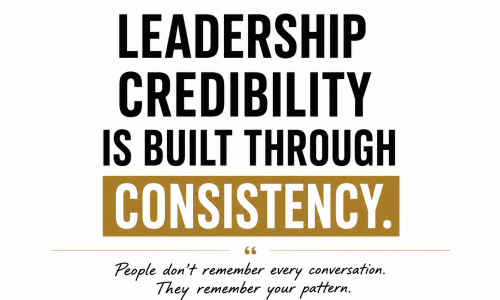
Trust is not built through announcements or leadership speeches. It is built through consistency. People trust leaders who are predictable in the best possible way.
They know what to expect. They know promises will be honoured. They know difficult conversations will be handled fairly. They know accountability applies equally to everyone.
Over time, these experiences create confidence. And confidence becomes trust. Trust then becomes influence. And influence becomes leadership.
The Takeaway
A title might make people listen to you temporarily. But it does not guarantee trust, respect, influence, or loyalty. Those things must be earned.
The strongest leaders understand that authority can create compliance, but influence creates commitment. They focus on communication rather than intimidation.
Relationships rather than hierarchy. Trust rather than control. Because ultimately, leadership is not measured by the power attached to your position.
It is measured by the impact you have on people. And perhaps the most important leadership question anyone can ask is this:
If your title disappeared tomorrow, would people still willingly follow your leadership?