When Leadership Starts to Feel Tight
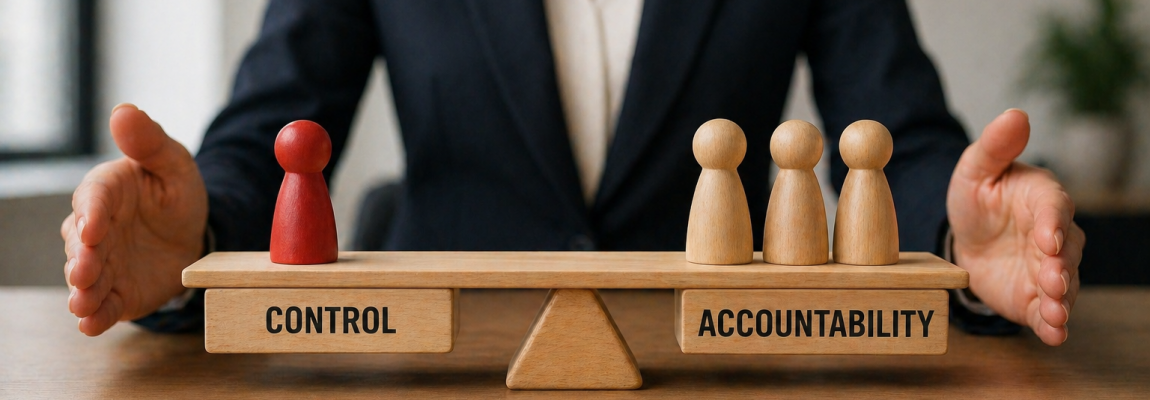
There is a difference between holding people accountable and trying to control how they work.
But in many environments, the two get mixed up. When delivery starts to slip, the natural reaction is to tighten things up. More check-ins. More updates. More oversight.
It feels like the responsible thing to do.
On the surface, it looks like leadership is becoming more involved. But over time, it often creates a different problem.
Performance does not improve. It shifts.
The Hidden Cost of Control
When control becomes the default, the way people work begins to change.
People stop taking ownership. They wait to be told what to do. They rely on direction for every step. They focus on reporting progress instead of making progress.
The work becomes more visible, but not necessarily more effective.
Because when everything is controlled, there is very little room left for responsibility.
And without responsibility, performance becomes dependent on constant supervision.
Why Oversight Does Not Equal Leadership
It is easy to assume that more oversight leads to better outcomes.
But oversight without intention often leads to dependency.
When leaders stay too close to the work, teams begin to disengage from decision-making. They stop thinking ahead. They stop taking initiative.
Not because they are incapable, but because the environment no longer requires it.
Control can create short-term order, but it weakens long-term capability.
What Accountability Actually Looks Like
Accountability works differently.
It is not about watching the work closely. It is about creating the conditions for ownership.
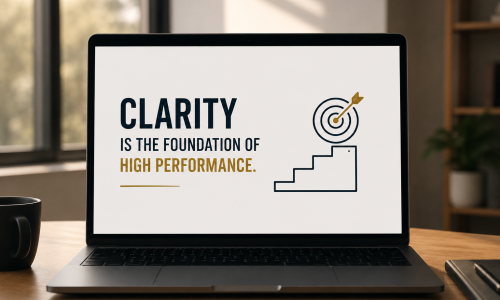
That starts with clarity. Being clear on outcomes so people understand what success looks like. Agreeing on responsibilities so there is no confusion around ownership. Addressing gaps early before they become bigger issues. Stepping back enough for people to take responsibility for how they deliver.
This approach creates space for people to think, act, and improve.
The Role of Trust and Clarity
Accountability requires trust, but it also requires structure.
Trust without clarity creates confusion. Clarity without trust creates control.
Strong leadership holds both.
When expectations are clear and ownership is defined, teams do not need constant oversight. They know what to do and how to move forward.
This is where performance becomes more consistent.
When Control Becomes the Default
Without clarity, leaders tend to fall back on control. More updates feel like progress. More visibility feels like alignment.
But activity is not the same as effectiveness.
When control becomes the default, performance often drops even if activity increases. Teams stay busy, but they lose momentum.
Because they are no longer driving the work. They are responding to it.
Creating a Culture of Ownership
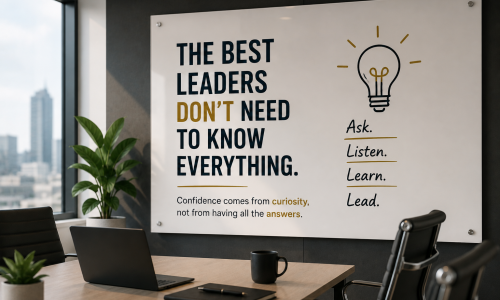
Leaders who build strong teams focus less on control and more on ownership.
They define clear expectations. They give people space to deliver. They step in when needed, but not by default.
Over time, this creates a different kind of environment. People think more. They act with more confidence. They take responsibility for outcomes, not just tasks.
This is what drives sustainable performance.
The Takeaway
Accountability and control are not the same.
Control creates compliance. Accountability creates ownership.
And ownership is what drives real performance.
Strong leadership is not about staying close to every detail. It is about creating clarity, building trust, and allowing people to take responsibility for their work.
Reflection
Have you worked in an environment where there was a lot of oversight, but very little ownership?
What impact did that have on how people showed up and performed?